Content Writing Services: Complete Guide to Choosing the Right Agency
Finding the right content writing agency can feel surprisingly difficult.
There are hundreds of agencies, freelancers, and content providers offering everything from blog writing and website copy to SEO content and complete content marketing solutions. Some promise exceptional quality, some compete mainly on price, and others focus on high-volume content production.
So, how do you know which content writing service is actually right for your business?
The answer isn’t simply to choose the agency with the lowest price or the longest list of services. Good content should understand your audience, reflect your brand, support your SEO strategy, and ultimately contribute to your business goals.
Whether you’re a small business looking for professional website content, a startup trying to build online visibility, an SEO professional needing reliable content production, or an agency searching for a dependable outsourcing partner, this guide will help you make a more informed decision.
Let’s look at what you should know before hiring a content writing agency.
What Are Content Writing Services?
Content writing services involve creating written content for businesses, organizations, websites, and other platforms.
Depending on your requirements, a professional content writing service may create blog posts, website pages, landing pages, product descriptions, articles, case studies, white papers, social media content, ebooks, and other forms of business content.
A good agency doesn’t simply take a topic and start writing. The process usually involves research, planning, writing, editing, optimization, and revisions.
The goal is to create content that is useful to your audience while supporting a specific business objective.
What Does a Content Writing Agency Do?
A professional agency typically manages several stages of the content creation process:
Research → Strategy → Writing → Editing → SEO → Delivery → Revisions
For example, if you need a blog about a service you offer, the agency may first understand your business, research your target audience, study competing content, identify relevant search terms, create an outline, write the article, edit it, optimize it for search, and then deliver it for review.
This is one reason professional content writing services can be more valuable than simply hiring someone to produce a certain number of words.
What Is Included in Professional Content Writing Services?
Depending on the provider and package, services may include:
- Topic research
- Audience research
- Content planning
- Keyword research
- Search-intent analysis
- Content creation
- Editing and proofreading
- SEO optimization
- Formatting
- Fact-checking
- Internal linking recommendations
- Revisions
However, not every content writing agency includes all of these services.
That’s why it’s important to ask exactly what you’re paying for before signing a contract.
Content Writing vs. Copywriting vs. Content Marketing
These terms are often used interchangeably, but they serve different purposes.
| Service | Primary Purpose |
|---|---|
| Content writing | Educate, inform, and engage |
| Copywriting | Persuade and encourage action |
| Content marketing | Attract, engage, and nurture an audience |
| SEO content | Help content become more visible in search |
For example, a 2,000-word educational blog post is generally content writing, while the headline and text on a sales landing page may be copywriting.
In practice, businesses often need a combination of all four.
What Types of Content Can a Writing Agency Create?
One of the first things to determine is what content your business actually needs.
A professional content writing agency may be able to handle multiple formats.
Website Content
Your website is often the first serious interaction a potential customer has with your business.
Agencies can create:
- Homepage content
- About Us pages
- Service pages
- Location pages
- Industry pages
- Landing pages
- FAQ pages
Good website content should explain what you offer, who you serve, why you’re different, and what the visitor should do next.
If you’re specifically looking for content writing services for websites, ask the agency whether it understands conversion-focused website structure as well as writing.
Blog Posts and Articles
Blogs can help businesses:
- Attract organic traffic
- Answer customer questions
- Build topical authority
- Educate potential customers
- Support service pages
- Generate leads
However, publishing articles simply to meet a monthly word count isn’t enough.
The topics should be connected to your audience, search demand, business objectives, and wider content strategy.
SEO Content
SEO content writing combines useful writing with search-engine optimization.
A capable provider may help with:
- Keyword research
- Search-intent analysis
- Topic selection
- Content outlines
- Keyword mapping
- Semantic topic coverage
- Internal linking
- On-page optimization
- Content updates
The objective isn’t to insert the same keyword repeatedly. It’s to create the most useful and relevant answer for the searcher’s query.
E-Commerce Content
E-commerce businesses may need:
- Product descriptions
- Category descriptions
- Buying guides
- Product comparisons
- Landing pages
- Promotional copy
- Blog content
Here, content needs to do two jobs: help search engines understand the page and help customers make purchasing decisions.
Specialized Content
Some businesses require more specialized expertise.
This may include:
- Technical writing
- Legal content
- Healthcare content
- Financial content
- SaaS content
- White papers
- Case studies
- Ebooks
For specialized subjects, always ask for relevant samples or evidence that the agency can understand your industry.
Marketing and Social Media Content
Some agencies also provide:
- Social media posts
- Email content
- Ad copy
- Promotional content
- Lead magnets
- Newsletter content
Before hiring an agency, make sure its services match the actual content mix your business needs.
Who Should Hire a Content Writing Agency?
There isn’t one type of business that needs professional content.
Different organizations outsource content for different reasons.
Small and Medium-Sized Businesses
A small or medium-sized business may not have enough work to justify hiring a full-time writer.
Outsourcing can provide access to professional content writing services without the cost of recruiting, training, managing, and retaining an in-house employee.
This can be particularly useful when you need website content, blogs, service pages, and marketing materials regularly.
Startups and Entrepreneurs
Startups often need to establish credibility quickly.
A new business may need website content, SEO articles, landing pages, thought-leadership content, and educational resources while the internal team is focused on product development and growth.
A reliable content partner can help the business maintain a consistent publishing schedule without building an entire content department.
Marketing Managers and SEO Professionals
Marketing teams often understand exactly what content they need but don’t have enough internal resources to produce it.
An agency can provide additional writing capacity while the marketing team focuses on strategy, distribution, analytics, and performance.
The biggest advantage here is often scalability.
E-Commerce Businesses
E-commerce companies can have hundreds or thousands of pages.
Creating useful product descriptions, category content, buying guides, and supporting blog content can quickly become a major workload.
A content partner can help maintain consistency across the website.
Website Owners and Publishers
Website owners may need regular articles to attract search traffic and build an audience.
Instead of producing every article themselves, they can outsource research and writing while concentrating on publishing, promotion, monetization, and business development.
Agencies Looking for White-Label Content
Digital marketing, SEO, web development, advertising, and branding agencies may need content for their clients without hiring additional writers.
A reliable freelance content writing agency or professional content partner can provide white-label services that the agency delivers under its own brand.
Before doing this, discuss confidentiality, ownership, communication, deadlines, revisions, and client-specific requirements.
Businesses Entering New Markets
Businesses expanding into new cities, states, countries, or industries may need localized content.
The agency should understand the differences in:
- Customer expectations
- Search behavior
- Terminology
- Regional intent
- Industry requirements
- Brand positioning
Simply replacing a city name throughout an existing article isn’t genuine localization.
Do You Need a Content Writing Agency, Freelancer, or In-House Writer?
There is no universal answer.
The right option depends on your budget, workload, expertise requirements, and how much management you’re willing to handle.
| Factor | Freelancer | Agency | In-House |
|---|---|---|---|
| Cost | Usually lower | Moderate to higher | Higher overall |
| Scalability | Limited to moderate | High | Moderate |
| Specialized expertise | Depends on individual | Often broader | Depends on employee |
| Consistency | Varies | Usually structured | High |
| Management effort | Moderate | Lower | Higher |
| Large-volume work | May be limited | Usually suitable | Depends on team size |
| Brand familiarity | Can develop | Can develop | Usually strongest |
When Should You Hire a Freelancer?
A freelancer may work well when you:
- Have occasional content requirements
- Need a specific writing specialty
- Have a limited budget
- Can manage the project yourself
A highly experienced freelancer can produce excellent work.
The challenge can arise when you suddenly need significantly more content than one person can reasonably deliver.
When Is an Agency a Better Choice?
An agency may be more appropriate when you need:
- Regular content
- Multiple content formats
- SEO support
- Multiple writers
- Specialized expertise
- Higher production capacity
- A structured workflow
A good agency can also provide backup when one writer isn’t available.
When Does an In-House Writer Make Sense?
An in-house writer may be worthwhile when content is central to your business and you need someone deeply involved with your organization every day.
However, remember that the actual cost of an employee includes more than salary.
There may also be recruitment, benefits, equipment, training, management, software, leave, and other overheads.
Can You Combine an In-House Team With an Agency?
Absolutely.
Many businesses use an internal marketing team for strategy and brand direction while outsourcing some content production.
This can provide a useful balance between brand familiarity and scalability.
What Should You Look for in a Content Writing Agency?
Choosing an agency requires looking beyond its website and pricing page.
Here are the most important factors to evaluate.
Relevant Industry Experience
Ask:
- Have they worked with businesses like yours?
- Do they understand your industry?
- Can they handle technical or regulated subjects?
- Can they show relevant samples?
An agency doesn’t necessarily need to specialize exclusively in your industry.
However, it should demonstrate that it can research unfamiliar subjects accurately and communicate them clearly.
A Strong Writing Portfolio
A portfolio tells you much more than a list of services.
Look at:
- Writing quality
- Structure
- Research depth
- Originality
- Readability
- Brand voice
- Ability to explain complex ideas
Don’t just read the first paragraph.
Read enough of the sample to understand whether the writer can maintain quality throughout a complete piece.
SEO Expertise
If organic search matters to your business, look for knowledge of:
- Keyword research
- Search intent
- Topic clusters
- Internal linking
- On-page SEO
- Content optimization
You don’t necessarily need an agency that offers every SEO service.
But your content provider should understand how its writing fits into the wider SEO strategy.
Research and Fact-Checking
Research is one of the biggest differences between average and high quality content writing services.
A professional writer should be able to understand your subject, identify reliable sources, separate facts from assumptions, and explain information accurately.
This becomes even more important in industries such as healthcare, finance, legal services, and technology.
Editing and Quality Control
Ask:
Is every article edited before delivery?
Writing and editing are different skills.
A strong editorial process can identify:
- Repetition
- Weak sections
- Grammar issues
- Factual problems
- Poor transitions
- Search-intent gaps
- Unnecessary jargon
Communication and Project Management
Even excellent writers can become difficult to work with if communication is poor.
Evaluate:
- Response times
- Project updates
- Point of contact
- Deadline management
- Feedback process
- Content calendar management
Scalability
Think beyond your current requirements.
You may need five articles today and twenty next quarter.
Ask whether the agency can scale without sacrificing quality.
How Do You Evaluate an Agency's Writing Quality?
Don’t choose an agency solely because its website says it provides quality content writing services.
Evaluate the actual work.
Check Writing Samples
Look for samples similar to the content you need.
A great social media writer isn’t automatically a great technical writer.
Likewise, someone who writes excellent blogs may not be experienced in conversion-focused landing pages.
Evaluate Research Depth
Ask yourself:
Does the article actually teach me something?
If an article contains only generic information that could have been produced after reading the first few search results, it may not provide much value.
Look for Originality
Good content should bring something useful to the discussion.
That could be:
- Original examples
- First-hand experience
- Expert insights
- Unique data
- Practical frameworks
- Better explanations
Check Readability
Professional writing doesn’t need complicated vocabulary.
The best content is usually clear, structured, natural, and easy to follow.
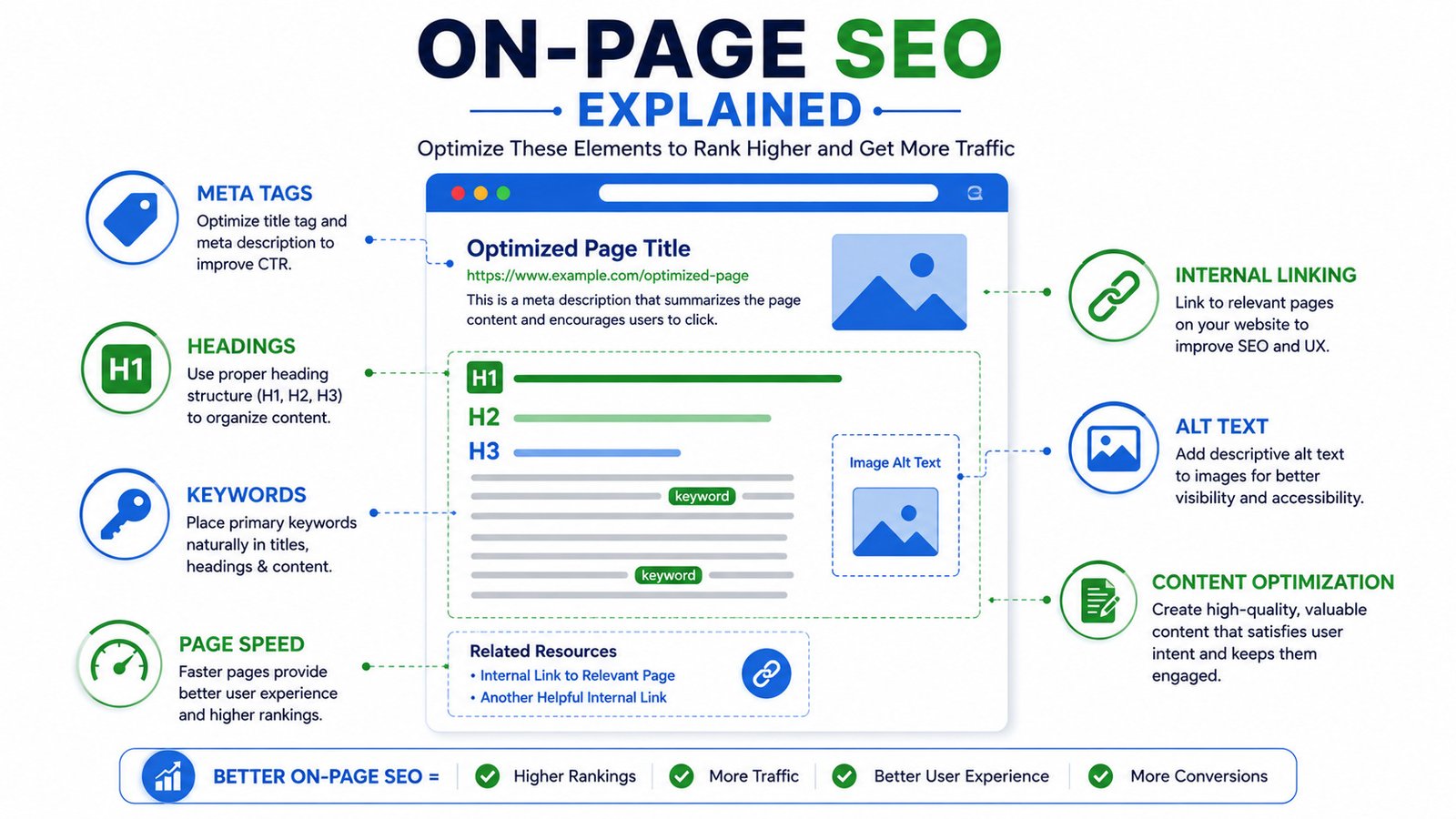
Evaluate SEO Structure
Look for:
- Useful headings
- Logical organization
- Search-intent alignment
- Natural keyword usage
- Helpful internal links
- Concise answers to important questions
Check Audience Fit
Imagine you’re the intended customer.
Would you understand the article?
Would you trust it?
Would it help you make a decision?
That’s more important than simply asking whether the content contains the target keyword.
Content Quality Checklist
Before approving a sample or article, ask:
- ✓ Is it original?
- ✓ Is it well researched?
- ✓ Is it factually accurate?
- ✓ Is it easy to understand?
- ✓ Is it audience-focused?
- ✓ Does it satisfy search intent?
- ✓ Is it SEO-friendly?
- ✓ Is it conversion-focused where appropriate?
Does the Agency Understand SEO?
If you’re hiring an agency for SEO content writing services, SEO knowledge should be part of your evaluation.
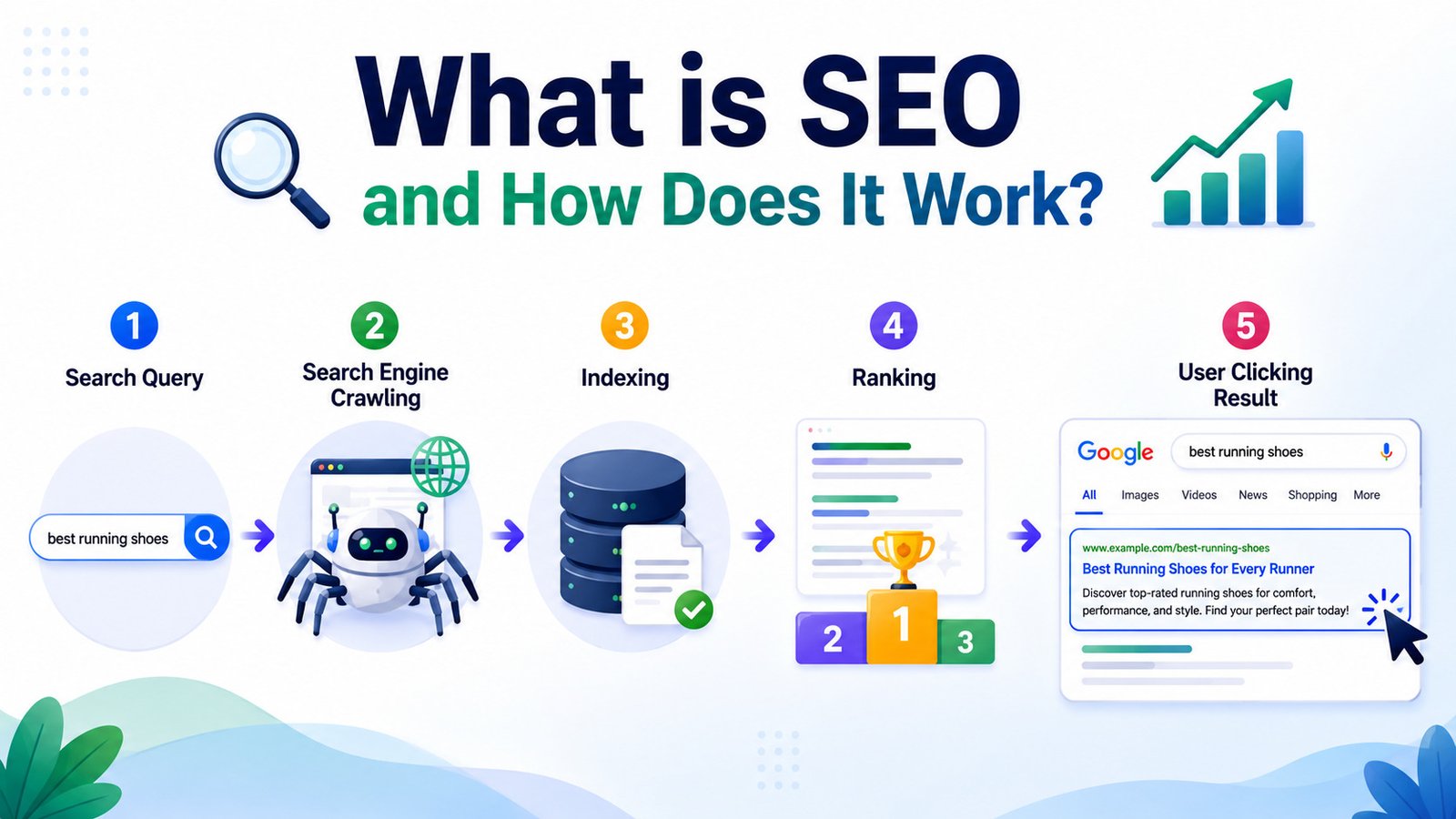
What Is SEO Content Writing?
SEO content writing is the process of creating useful content designed to satisfy search intent while making it easier for search engines to understand the topic.
The goal isn’t to write for search engines instead of people.
The goal is to create content that people genuinely want to read and search engines can understand.
What Should an SEO Content Agency Actually Do?
A capable agency may handle:
- Keyword research
- Search-intent analysis
- Topic selection
- Content outlining
- Keyword mapping
- Related-topic coverage
- Internal linking
- On-page optimization
- Content updating
For example, an article targeting “content writing services” shouldn’t simply repeat that phrase dozens of times.
It should naturally address related questions such as pricing, services, agency selection, quality, SEO, outsourcing, and the difference between agencies and freelancers.
Is Keyword Density Still Important?
Keyword repetition alone doesn’t make content good.
Use important keywords where they make sense, but never sacrifice readability to increase keyword frequency.
Can Content Rank Without Backlinks?
Sometimes, yes.
A strong article cannot guarantee rankings, but it gives your website a better foundation for earning visibility.
How Does Content Support an Overall SEO Strategy?
Your content shouldn’t exist in isolation.
It can support:
- Service pages
- Location pages
- Industry pages
- Pillar pages
- Topic clusters
- Internal linking
For example, a general article about content writing services can link to more specific service pages and supporting articles.
This creates a stronger relationship between your informational and commercial content.
How Much Do Content Writing Services Cost?
One of the first questions businesses ask is:
“How much will this cost?”
The honest answer is that pricing varies considerably.
How Do Content Writing Agencies Charge?
Common pricing models include:
- Per word
- Per article
- Per page
- Per project
- Monthly retainer
- Content packages
There is no universally correct pricing model.
The important question is what you actually receive for the price.
What Affects Content Writing Prices?
Pricing can depend on:
- Writer expertise
- Industry complexity
- Research requirements
- Word count
- SEO requirements
- Content format
- Turnaround time
- Editing
- Number of revisions
- Content volume
A 1,500-word generic article and a 1,500-word research-heavy technical article may have completely different production requirements.
Why Are Some Agencies Much Cheaper Than Others?
When comparing content writing services prices, don’t look at the number alone.
Lower pricing may reflect a different level of:
- Research
- Editing
- Writer experience
- Quality control
- Strategy
- Content depth
A cheaper article isn’t necessarily a better deal if it requires extensive rewriting before you can publish it.
Should You Choose the Cheapest Content Writing Service?
Usually, no.
That doesn’t mean you should automatically choose the most expensive provider either.
The better question is:
“Which provider offers the best combination of quality, expertise, reliability, and value for my specific requirements?”
A low-cost article that doesn’t attract traffic, educate customers, or generate leads may be more expensive in the long run.
How Should You Calculate Content ROI?
Consider whether the content contributes to:
- Organic traffic
- Qualified leads
- Conversions
- Revenue
- Customer acquisition
- Brand visibility
For SEO content, remember that results may take time.
A single article may not generate immediate revenue, but a well-planned content library can contribute to organic growth over months and years.
What Questions Should You Ask Before Hiring a Content Writing Agency?
Before signing an agreement, ask the agency:
- Can you show relevant samples?
- Have you worked in my industry?
- Who will write my content?
- How do you research topics?
- Do you provide keyword research?
- How do you optimize content for SEO?
- How do you ensure originality?
- Is content edited before delivery?
- How many revisions are included?
- What is your turnaround time?
- How do you handle feedback?
- Who owns the content after delivery?
- Can you scale production?
- Do you provide reporting?
- Can we start with a trial project?
Don’t hesitate to ask these questions.
A professional provider should be comfortable explaining its process.
https://wordsandcappuccinos.com/portfolio-content-writing-services
Suppose you’ve shortlisted three agencies.
How do you choose?
Instead of relying on instinct, create a simple scorecard.
| Evaluation Factor | Suggested Weight |
|---|---|
| Writing quality | 25% |
| Relevant experience | 15% |
| SEO expertise | 15% |
| Portfolio/case studies | 10% |
| Research process | 10% |
| Pricing/value | 10% |
| Communication | 5% |
| Turnaround | 5% |
| Revisions/support | 5% |
Give each agency a score for every factor.
This makes the comparison more objective.
Most importantly, don’t automatically choose the lowest price.
A provider charging slightly more may offer significantly better research, editing, strategy, communication, and consistency.
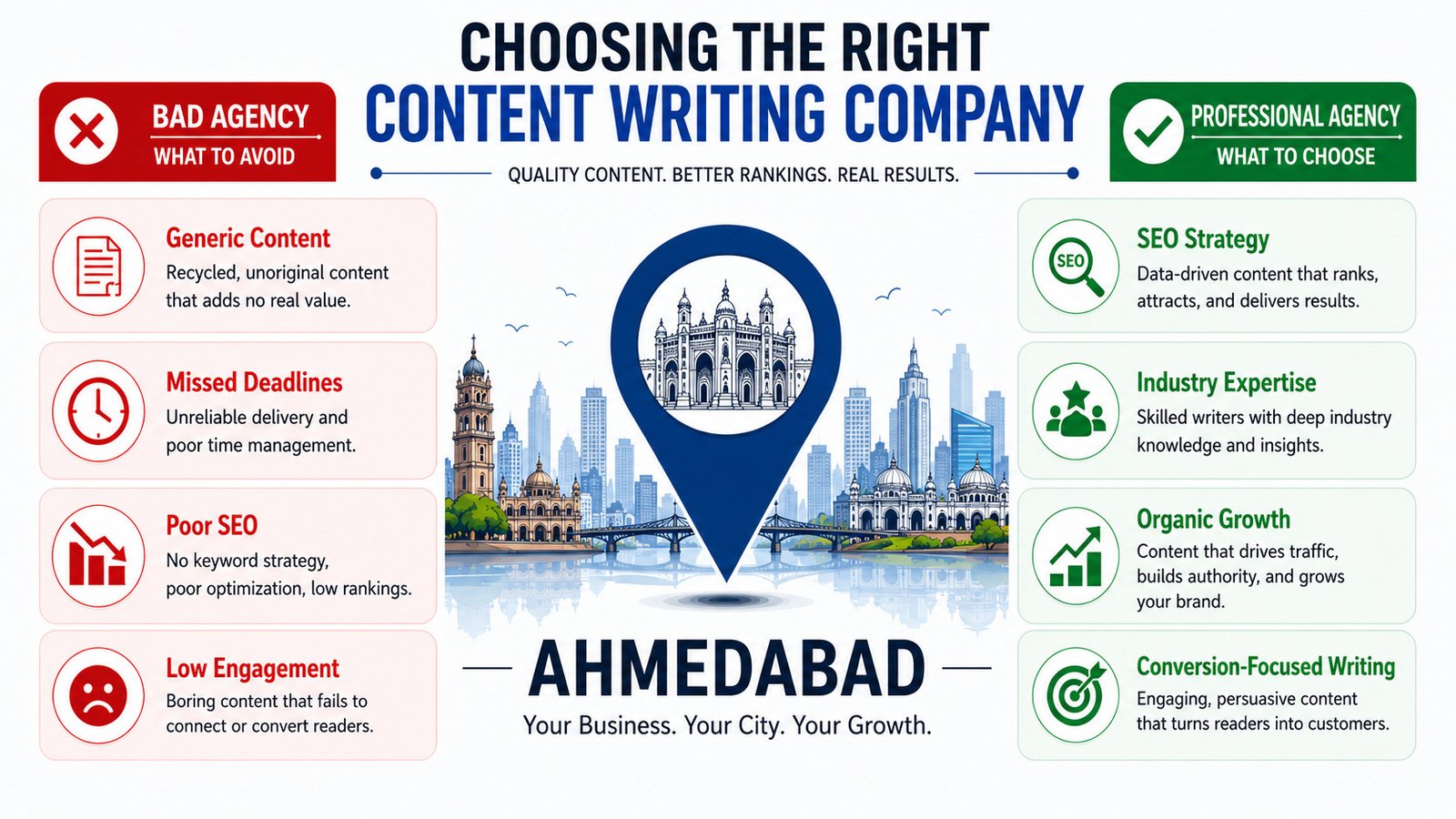
Red Flags to Watch for When Choosing an Agency
Knowing what to avoid is just as important as knowing what to look for.
Extremely Low Prices
Very low prices aren’t automatically bad, but they deserve closer examination.
Ask what is actually included.
No Portfolio or Verifiable Samples
If an agency claims extensive experience but cannot show relevant examples, be cautious.
Guaranteed Google Rankings
No legitimate content provider can guarantee a specific Google ranking.
SEO performance depends on many factors outside the writer’s control.
Keyword Stuffing
If the agency talks primarily about inserting keywords rather than satisfying search intent, that’s a warning sign.
Generic Content
If every article sounds like it was written from the same template, the content may not be sufficiently customized.
Poor Communication
Missed emails, unclear deadlines, and slow responses can become serious problems during long-term projects.
No Clear Revision Policy
Before starting, understand what happens if the first draft doesn’t meet your expectations.
No Research Process
Ask how writers gather information and verify facts.
If the answer is simply “we use AI,” ask additional questions about human review and quality control.
Unedited AI-Generated Content
AI can be useful during content production, but businesses should understand how an agency maintains accuracy, originality, expertise, and brand voice.
Unrealistic Turnaround Promises
High-quality research and editing take time.
Be cautious about agencies promising large volumes of high-quality, highly researched content almost instantly.
No Understanding of Your Audience
The agency should know who the content is for.
Writing for “everyone” usually results in content that connects strongly with no one.
How Does the Content Writing Process Work?
A professional content project usually follows a structured process.
Step 1 — Business and Audience Briefing
The agency learns about:
- Your business
- Products or services
- Customers
- Goals
- Competitors
- Brand voice
Step 2 — Research
Writers research the topic, competitors, audience questions, and reliable sources.
Step 3 — Keyword and Search-Intent Analysis
For SEO projects, relevant search terms and the intent behind them are identified.
Step 4 — Content Outline
The writer creates the structure before drafting.
A good outline prevents important questions from being missed.
Step 5 — Writing
The content is developed according to the agreed brief and brand voice.
Step 6 — Editing and Proofreading
The draft is reviewed for clarity, accuracy, grammar, structure, and consistency.
Step 7 — SEO Optimization
Where applicable, the article is optimized for:
- Search intent
- Headings
- Keywords
- Internal links
- Metadata
- Topic coverage
Step 8 — Client Review
You review the content and provide feedback.
Step 9 — Revisions
The agency makes the agreed revisions.
Step 10 — Final Delivery and Publishing
The finished content is delivered in the agreed format and can then be published.
A clear process reduces misunderstandings and makes long-term content production much easier.
How Does an Agency Create Content Specifically for Your Business?
One of the biggest concerns about outsourcing is:
“Will the content sound generic?”
It shouldn’t.
Understanding Your Brand
The agency should learn your:
- Brand personality
- Tone
- Values
- Positioning
- Preferred terminology
Understanding Your Target Audience
Content should reflect what your customers actually care about.
For example, a technical buyer may need detailed specifications, while a small-business owner may want simple explanations and practical examples.
Understanding Your Products and Services
Writers need enough information to explain what you offer accurately.
A good agency should ask questions rather than simply making assumptions.
Competitor Research
Competitor research can help identify:
- Content gaps
- Common customer questions
- Positioning opportunities
- Topics competitors aren’t covering well
The goal isn’t to copy competitors.
It’s to understand the landscape and create something more useful.
Developing Your Brand Voice
Your website shouldn’t sound like a completely different company every time a new writer creates an article.
A consistent brand voice builds familiarity and trust.
Identifying Content Gaps
An agency can identify questions your existing content doesn’t answer.
These gaps can become opportunities for new blogs, FAQs, guides, service pages, and supporting resources.
Matching Content With the Buyer’s Journey
Different readers have different levels of awareness.
Someone searching “what is content writing?” needs education.
Someone searching “professional content writing services” may already be considering hiring a provider.
Your content strategy should address both.
Does Industry Expertise Matter When Choosing a Content Writing Agency?
Yes, but the answer depends on the complexity of your subject.
Industries such as:
- Healthcare
- Finance
- Legal
- SaaS
- Technology
- Real estate
- E-commerce
- Automotive
- Education
may require more specialized knowledge.
For highly technical or regulated topics, look for an agency with relevant experience or a strong process for working with subject-matter experts.
For less technical subjects, excellent research skills and the ability to understand your business may be sufficient.
The important thing is not whether the agency has written about every possible topic.
It’s whether it can learn, research, understand, and communicate your subject accurately.
How Do You Know If Your Content Is Actually Working?
Publishing content is not the final goal.
Business results are.
Organic Traffic
Are more people finding your website through search?
Keyword Rankings
Are your target topics becoming more visible?
Search Impressions
Are your pages appearing more frequently in search results?
Click-Through Rate
Are people choosing your result when they see it?
Engagement
Are visitors actually reading and interacting with your content?
Leads
Is content contributing to enquiries, calls, forms, or other business opportunities?
Conversions
Are visitors taking valuable actions?
Revenue and Assisted Conversions
For businesses with proper analytics, look beyond direct conversions.
Content may introduce a customer to your brand before another page eventually generates the sale.
How Long Does SEO Content Take to Produce Results?
There is no universal timeline.
Results can depend on:
- Website authority
- Competition
- Content quality
- Search intent
- Existing rankings
- Technical SEO
- Internal linking
- Backlinks
- Industry
- Publishing consistency
Be cautious of anyone promising guaranteed rankings or instant SEO results.
A strong content strategy is generally a long-term investment, not an overnight shortcut.
Content Writing Agency vs. AI: What Should Businesses Choose?
AI has changed the content industry, and it’s reasonable to ask how it fits into your content strategy.
The question isn’t necessarily whether AI or humans should be used.
The better question is:
How is AI being used, and what quality controls are in place?
Where AI Can Help
AI can be useful for:
- Brainstorming
- Content ideation
- Outlining
- Editing assistance
- Repurposing
- Summarizing information
Where Human Expertise Matters
Human expertise remains particularly valuable for:
- Original insights
- Industry knowledge
- Brand voice
- Strategic decisions
- Fact-checking
- Expert interviews
- Editorial judgment
- Conversion strategy
AI can help accelerate certain parts of content production.
But simply generating an article and publishing it without proper research, editing, fact-checking, and business context is unlikely to produce the quality most serious businesses need.
What Should You Ask an Agency About AI?
Ask:
- Is AI used in your content process?
- Is every AI-assisted draft reviewed by a human?
- How do you verify facts?
- How do you maintain originality?
- How do you incorporate client expertise?
- How do you ensure content matches our brand?
You don’t necessarily need an agency that never uses AI.
You need an agency that uses technology responsibly without replacing research, expertise, editorial judgment, and accountability.
How to Choose the Right Content Writing Agency: 8-Step Checklist
If you’ve reached this point, you can simplify the decision into eight steps.
Step 1: Define Your Content Goals
Decide what you’re trying to achieve.
Is it:
- More organic traffic?
- More leads?
- More sales?
- Greater authority?
- Better website messaging?
- Brand awareness?
Step 2: Identify the Content You Need
Determine whether you need:
- Blogs
- Website pages
- Product descriptions
- SEO content
- Landing pages
- Case studies
- Technical content
- Social media content
Step 3: Determine Your Publishing Requirements
How much content do you realistically need every month?
Don’t choose a volume simply because an agency offers it.
Choose a volume you can support with a meaningful strategy.
Step 4: Set a Realistic Budget
Consider both your budget and the business value you expect from the content.
Avoid treating content purely as a commodity measured by price per word.
Step 5: Shortlist Relevant Agencies
Look for agencies that have:
- Relevant experience
- Strong samples
- Clear processes
- Good communication
- Appropriate services
Step 6: Evaluate Portfolio and Expertise
Read actual samples.
Don’t rely solely on testimonials or marketing claims.
Step 7: Compare Proposals, Processes, and Pricing
Look at the complete package.
Ask:
What am I getting for the price?
Step 8: Start With a Trial Project
If you’re unsure, don’t immediately commit to a large long-term contract.
A smaller project can help you evaluate:
- Writing quality
- Research
- Communication
- Turnaround
- Revisions
- Overall working relationship
If the experience is good, you can scale from there.
Frequently Asked Questions About Content Writing Services
What are content writing services?
Content writing services involve creating written content for businesses and websites, including blogs, website pages, SEO articles, product descriptions, landing pages, case studies, ebooks, and other marketing materials.
How much do content writing services cost?
Pricing varies depending on the type of content, word count, research requirements, writer expertise, SEO requirements, turnaround time, editing, and revisions. Agencies may charge per word, article, page, project, or through monthly packages.
Is hiring a content writing agency worth it?
It can be, particularly when you need consistent, professional content but don’t want to build and manage a full-time writing team.
The value depends on whether the agency’s work supports your actual business goals.
How do I choose a good content writing agency?
Review its portfolio, relevant experience, research process, SEO knowledge, editing process, communication, pricing, revision policy, and ability to understand your audience.
What is the difference between a content writer and a content writing agency?
A content writer is generally an individual professional, while an agency is a broader service provider that may have multiple writers, editors, strategists, and project managers.
However, the quality of an individual writer can still be excellent, so don’t assume an agency is automatically better.
Should I hire a freelancer or an agency?
A freelancer can be a good choice for smaller or specialized projects. An agency may be more suitable when you need ongoing content, multiple formats, greater scalability, or access to broader expertise.
Can a content writing agency help with SEO?
Yes. Many agencies provide SEO-focused content services that include keyword research, search-intent analysis, content structuring, optimization, and internal linking.
However, always confirm exactly what SEO services are included.
How long does it take to write a blog post?
It depends on the topic and depth required.
A simple article may require relatively little research, while a technical, competitive, or data-heavy article can take significantly longer.
Can agencies write specialized industry content?
Yes, provided they have relevant expertise or a strong research and subject-matter-expert collaboration process.
For regulated industries, ask about fact-checking and review procedures.
How do I check whether content is original?
Ask the agency about its originality and quality-control process.
You can also use plagiarism-detection tools, but originality isn’t just about avoiding copied sentences. Valuable content should also offer its own useful explanations, examples, insights, and structure.
How many revisions should be included?
There is no universal number.
The important thing is that the revision policy is clearly defined before the project starts.
Who owns the content after delivery?
This depends on your agreement with the provider.
Clarify ownership and usage rights before signing the contract.
Can content writing agencies create website content?
Yes. Many professional providers create homepage content, service pages, landing pages, About pages, location pages, and other website copy.
Can agencies provide ongoing monthly content?
Yes. Monthly arrangements are common for businesses that need a consistent content pipeline.
Before signing up, confirm the monthly volume, formats, turnaround times, revision process, and reporting.
Can AI-generated content be used for business websites?
AI can be used as a tool during content production, but businesses should prioritize accuracy, originality, usefulness, search intent, expertise, and human editorial review.
The key question isn’t simply whether AI was used. It’s whether the final content genuinely helps the audience and meets the quality standards of the business.
Final Verdict: What Makes a Content Writing Agency the Right Choice?
Choosing a content writing agency shouldn’t come down to finding the cheapest price per word.
The right provider should offer the right combination of:
Quality + Expertise + Research + SEO + Reliability + Communication + Scalability + Value
Your ideal agency should understand your business, know your audience, produce content consistently, communicate clearly, and create work that serves a genuine purpose.
If you’re a small business, you may need a dependable partner for your website and blogs.
If you’re a startup, you may need someone who can help establish your online presence.
If you’re an SEO or marketing professional, you may need reliable content production at scale.
If you’re an e-commerce business, you may need product and category content that supports both visibility and conversions.
And if you’re an agency, you may need a professional content writing services provider that can work behind the scenes and consistently meet your clients’ expectations.
There isn’t one “best” agency for every business.
There is, however, a right agency for your particular goals, audience, industry, budget, and content requirements.
Take the time to review samples, ask questions, understand the process, compare value rather than just price, and consider starting with a smaller project.
That’s usually a much better way to build a successful long-term content partnership than choosing a provider based on a sales pitch alone.
Need professional content for your website, blog, SEO strategy, or marketing campaigns? Start by assessing your content goals and finding a provider whose expertise matches what your business actually needs.


Ankita Gupta
Our Founder
Ankita founded Words And Cappuccinos to prove that good writing is a business asset, not a line item. She leads strategy across every account.